
How safe is stem cell therapy for knee pain?
Stem cell therapy for knee pain is one of the best studied uses of regenerative medicine, and its safety profile is favorable.
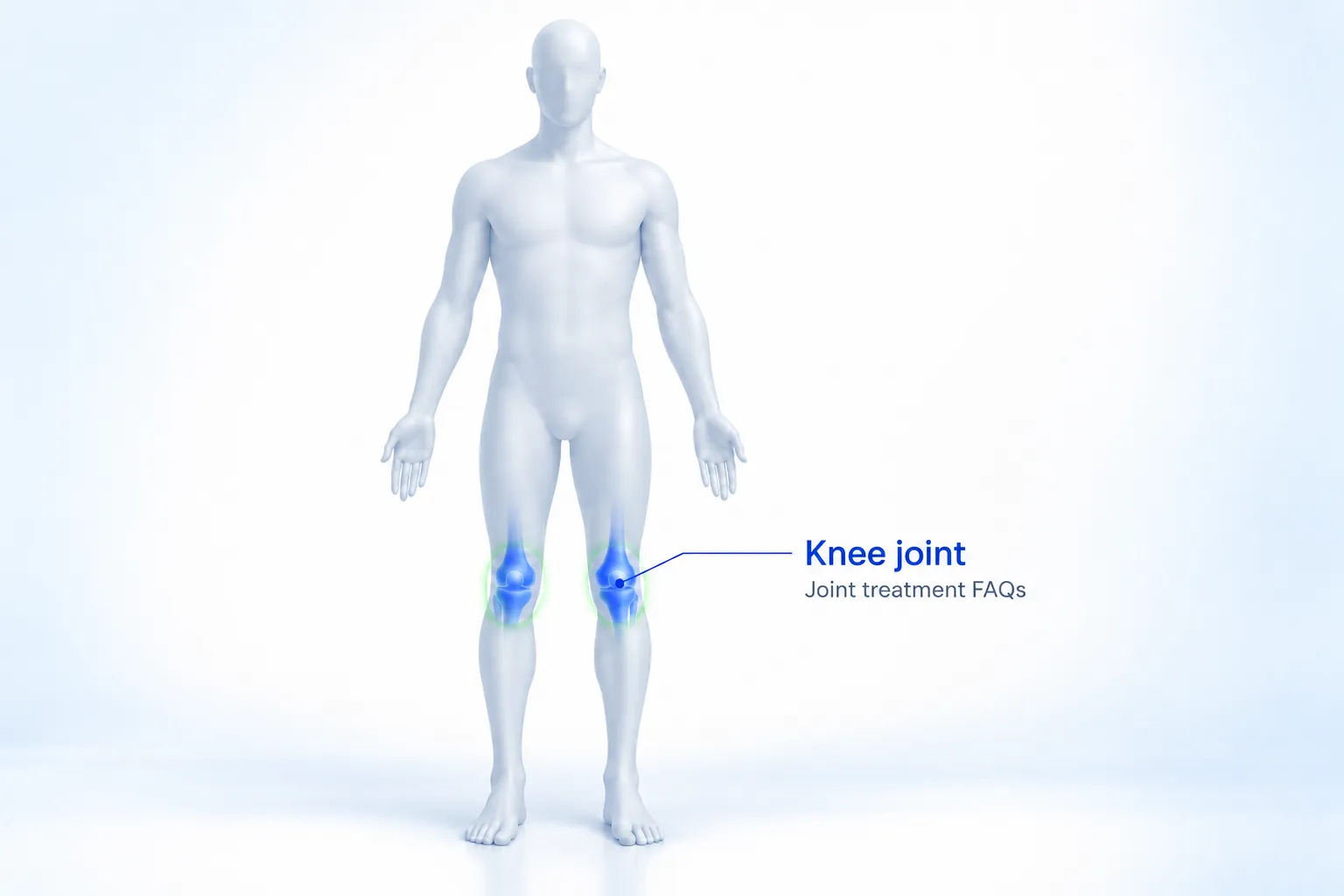
A 2024 meta-analysis of 25 randomized trials in knee osteoarthritis found no difference in serious adverse events between mesenchymal stromal cell (MSC) injections and control treatments such as placebo or hyaluronic acid. A randomized trial using umbilical cord MSCs, the cell type used at Stem Cell Mexico, reported no serious adverse events attributed to the cells. The most common side effects are temporary knee pain, swelling (effusion) and stiffness for several days. Rare risks include joint infection and bleeding, which are minimized through sterile technique, ultrasound guidance and careful screening. At Stem Cell Mexico, knee treatments use allogeneic MSCs from umbilical cord tissue, often combined with platelet-rich plasma (PRP), injected by specialists, with a structured recovery plan.
This guide focuses specifically on the knee: what the research shows, what to expect after treatment, which knee conditions affect safety and how to protect your result.
What the evidence shows
Meta-analysis of randomized trials
The 2024 systematic review and meta-analysis by Tabet and colleagues in the Journal of Orthopaedic Translation included 25 randomized controlled trials with more than 1,000 participants receiving MSCs for knee osteoarthritis. Serious adverse events were similar between MSC and control groups. The analysis also found improvements in pain and function, although the overall certainty of evidence was rated low because studies varied in cell type, dose and design.
Umbilical cord MSCs in the knee
A randomized controlled phase I/II trial published in Stem Cells Translational Medicine (Matas and colleagues, 2019) compared umbilical cord MSC injections with hyaluronic acid in knee osteoarthritis. No serious adverse events were attributed to the cells, and patients who received repeated MSC doses had better pain and function scores at one year than the hyaluronic acid group.
Guideline context
The UK's NICE osteoarthritis guideline (NG226) recommends exercise, weight management and education as core treatments, with medications or knee replacement when needed. Cell therapy is not yet part of routine guideline recommendations.
What to expect after a knee injection
Swelling (effusion)
The knee joint has a large internal space and responds to injections with fluid build-up. Swelling is common for the first several days and may make the knee feel tight or difficult to bend fully.
Pain and stiffness
Often peaks in the first 48 to 72 hours and improves over about a week. Some people limp briefly.
Warmth
Mild warmth around the knee can occur as part of the local response; increasing heat, redness and fever are not expected and should be reported.
Bruising
Small bruises at needle sites are common.
Most patients can walk out of the clinic, although they are advised to rest the first days.
Rare but important risks
- Septic arthritis (joint infection): rare with sterile technique, but serious. It typically causes worsening pain, redness, heat, swelling and fever after the first days.
- Bleeding into the joint (hemarthrosis): more likely with blood thinners or bleeding disorders.
- Strong inflammatory flare: occasionally more intense swelling and pain that resolves over days with rest and simple measures.
- Allergic reactions: rare, to anesthetics, antiseptics or preparation components.
- Sedation-related effects: low risk with monitoring.
Knee conditions that affect safety and planning
Severity of osteoarthritis
Mild to moderate osteoarthritis (Kellgren-Lawrence grades 2 to 3) is the most common indication. In severe, bone-on-bone disease with deformity, injections are safe but less likely to help, and knee replacement may be the better long-term option.
Meniscus tears and Baker's cysts
Degenerative meniscus tears and Baker's cysts (fluid-filled cysts behind the knee) are common in osteoarthritis. They are identified on imaging and considered in the injection plan.
Previous surgery
Prior arthroscopy, meniscus repair or ACL reconstruction does not prevent treatment but changes the anatomy and is reviewed. Knees with a joint replacement are not injected with cells.
Recent corticosteroid injections
A recent cortisone injection in the same knee may affect timing because steroids can reduce cell viability. Tell the doctor when you last had one.
Alignment and instability
Significant bow-legged or knock-kneed alignment, or ligament instability, may limit benefit and may need separate treatment such as bracing or surgery.
Treating both knees at the same time
Many people have osteoarthritis in both knees and ask whether treating both in one visit is safe. In general, bilateral treatment is feasible and is commonly done, but it has practical implications. Both knees may be swollen and stiff during the first days, which can make walking, stairs and getting in and out of cars more difficult, so planning help at home, a comfortable place to rest and, for some patients, a cane or walker for a few days is wise. The total cell dose and volume are higher, which the doctor accounts for in the plan. If one knee is much worse, or if mobility is already limited, the doctor may recommend treating the more affected knee first. Discuss your home situation, work demands and travel plans so the safest option can be chosen.
Patient factors that increase risk
- Active infection anywhere in the body, or skin problems over the knee.
- Uncontrolled diabetes or immune suppression.
- Blood thinners or bleeding disorders.
- Obesity, which increases joint load and can slow recovery.
- Cancer within the past five years.
How we reduce risk
- Specialist review of knee X-rays or MRI, symptoms and medications before acceptance; we decline treatment when benefit is unlikely or risk is too high.
- Pre-treatment testing: complete blood count, metabolic panel, urinalysis and tumor markers.
- Quality-controlled cells: donor screening, infectious disease testing, and laboratory quality testing before release.
- Ultrasound-guided injection with strict sterile technique.
- Appropriate dosing: larger volumes are not automatically better and can increase swelling.
- Observation and written instructions, including warning signs.
Recovery: protecting your knee
- Day of treatment and the next day: rest; keep the leg elevated when sitting; no exercise.
- No ice or heat on the knee on the day of treatment or the next day; from the third day, short applications of about 10 minutes, followed by two to three hours of rest, as instructed.
- First 10 days: walk only as needed for daily activities; avoid stairs when possible.
- Around day 10: walking up to 30 minutes on flat ground.
- From week 2: start guided stretching and non-weight exercises, then progress gradually with a physical therapist, for example stationary cycling with low resistance before more demanding activities.
- For about a month: avoid running, jumping, deep squats, kneeling and heavy leg exercises.
- Alcohol: avoid for at least two weeks; continue avoiding anti-inflammatory painkillers and supplements as instructed.
Keeping the thigh muscles active with gentle exercises, once allowed, helps support the knee and reduce stiffness. Simple movements such as tightening the thigh muscle while sitting, ankle pumps and gentle knee bending within a comfortable range are often recommended early, but follow the specific exercises your care team gives you.
How knee treatment safety compares with alternatives
- Cortisone injections: fast but usually short-lived relief; repeated injections may affect cartilage.
- Hyaluronic acid: generally safe, but not recommended for routine use by NICE.
- PRP alone: safe and supported for symptom relief in knee osteoarthritis by some sports medicine consensus statements.
- Knee replacement: effective for advanced disease, with surgical risks such as infection and blood clots and a recovery of several months.
Who may be a safe candidate
- Knee pain with confirmed osteoarthritis, meniscus or soft tissue problems on recent imaging.
- No knee replacement in the treated knee.
- No active infection, uncontrolled bleeding risk or cancer within the past five years.
- Willingness to follow recovery and rehabilitation instructions.
Signs to report after treatment
Contact the team or seek urgent care for fever, worsening pain, redness or heat in the knee after the first few days, inability to put weight on the leg, or calf pain and swelling (which can indicate a blood clot).
What our patients usually receive
Based on the treatment plans our team prepares for patients, a typical protocol at Stem Cell Mexico includes:
- 20 to 40 million Wharton's jelly MSCs per treated area, applied by direct injection with ultrasound guidance, or fluoroscopy guidance for the spine.
- Platelet-rich plasma (PRP) in many plans, applied together with the cells.
- One night at our facilities with nursing and medical monitoring.
- Consultation with your doctor and the stem cell specialist, pre-treatment laboratory tests and ground transportation from the San Diego airport area.
- Your recent imaging: an MRI of the area no older than three months is requested; if yours is older, a new one can be scheduled in Tijuana on your arrival day.
Based on what patients tell us, many begin to notice improvement within a few days to a few weeks after the application, while others improve more gradually over the following months. Our team stays in contact after treatment to follow your progress and decide whether a second application or a PRP session could help.
Questions to ask during your evaluation
- How severe is my osteoarthritis, and how does that affect my chances and risks?
- Will the meniscus or other structures be treated?
- How many cells will be injected, and with what guidance?
- When was my last cortisone injection, and does it affect timing?
- What rehabilitation plan should I follow?
Bottom line
Stem cell therapy for knee pain has a favorable safety record in randomized trials, with temporary swelling, pain and stiffness as the most common effects and serious complications being rare. Safety depends on proper selection, ultrasound guidance, sterile technique, a documented cell product and careful recovery. A medical evaluation can help determine whether this type of regenerative treatment is appropriate and safe for your knee, goals and medical history.
References
- Tabet CG et al. Advanced therapy with mesenchymal stromal cells for knee osteoarthritis: systematic review and meta-analysis of randomized controlled trials. Journal of Orthopaedic Translation, 2024 (opens in a new tab)
- Matas J et al. Umbilical cord-derived mesenchymal stromal cells (MSCs) for knee osteoarthritis: repeated MSC dosing is superior to a single MSC dose and to hyaluronic acid in a controlled randomized phase I/II trial. Stem Cells Translational Medicine, 2019 (opens in a new tab)
- NICE guideline NG226: Osteoarthritis in over 16s, diagnosis and management (opens in a new tab)