
How much does stem cell treatment for knee pain cost?
At Stem Cell Mexico, stem cell treatment for knee pain typically costs between $3,900 and $6,000 USD for one knee; when both knees are treated, the plan is priced as a multiple-joint treatment, typically $6,000 to $9,000 USD.
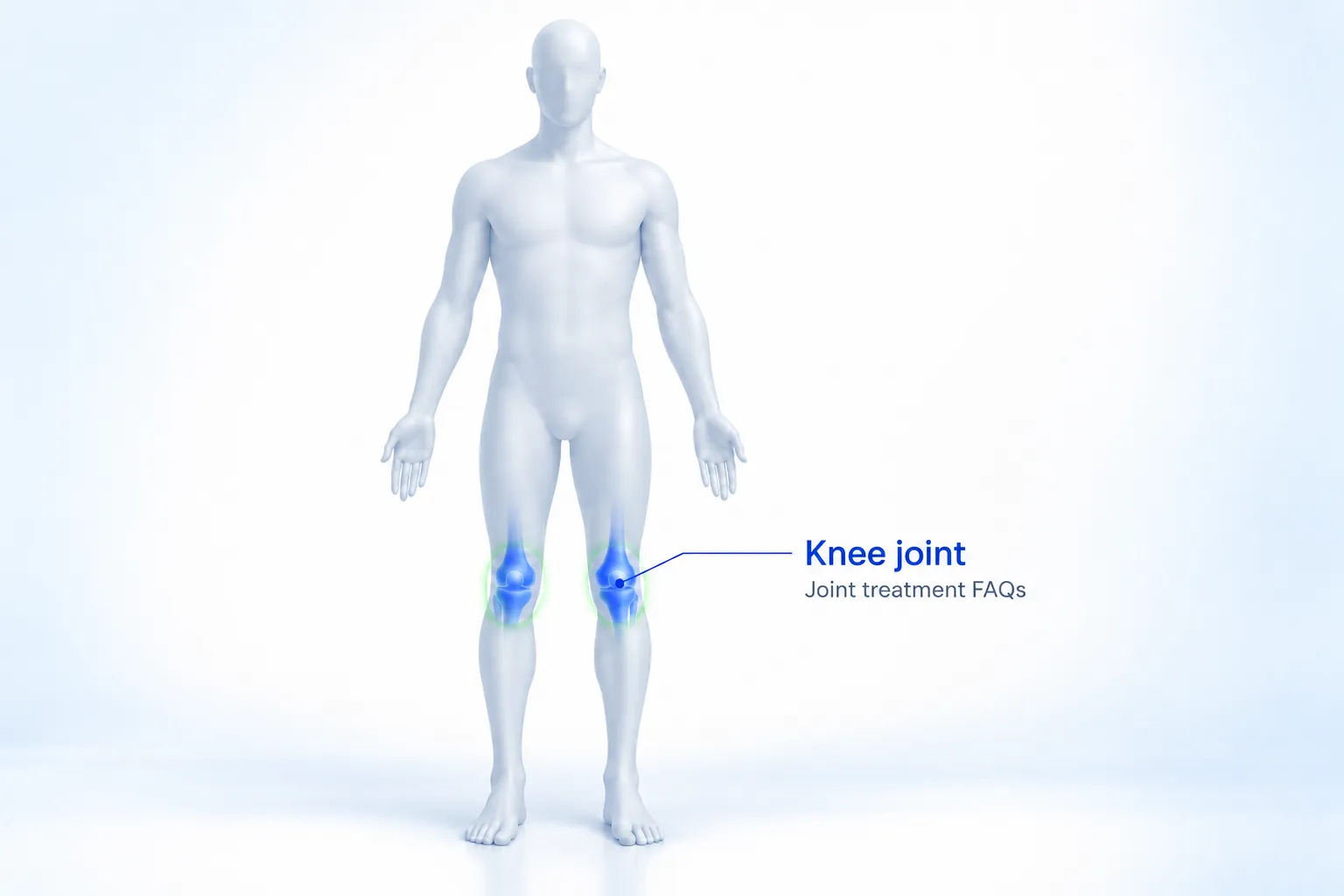
The final price depends on whether one or both knees are treated, the number of cells your doctor recommends (usually 20 to 40 million cells per knee), whether an intravenous (IV) infusion is added, whether you need an MRI on arrival and which logistics you choose. Your complete cost is confirmed in writing after a medical evaluation and before you pay any deposit, and only the items expressly listed in your quote are included.
That number answers the practical question, but it is only useful if you also understand what you are paying for, how the price compares with other knee treatments, and what the scientific evidence says about results. This guide walks through all three so you can make an informed decision.
What the price usually includes
A stem cell treatment for the knee is not just an injection. It is a short medical process that starts before you arrive and continues after you go home. A typical knee plan at our clinic includes:
- Medical evaluation and consultation with the doctor and stem cell specialist, including a review of your imaging and medical history.
- Pre-treatment laboratory testing, such as a complete blood count, metabolic panel, urinalysis and tumor markers, to confirm you are a safe candidate on the day of treatment.
- The cell product itself: allogeneic mesenchymal stromal cells (MSCs) derived from donated umbilical cord tissue (Wharton's jelly), prepared for your scheduled date.
- Image-guided application: injections performed with ultrasound guidance so the cells are placed precisely inside the joint and, when indicated, in surrounding structures.
- Platelet-rich plasma (PRP), prepared from a small sample of your own blood and applied together with the cells.
- Sedation, when the protocol calls for it, so you stay comfortable and still during the procedure.
- Short medical observation, often including one night under nursing supervision.
- Ground transportation between the San Diego airport area and the clinic, and structured follow-up after you return home.
Items that are usually not included unless your quote says otherwise: flights, hotel nights outside the clinic, companion lodging, and an MRI if you do not bring a recent one.
Why the price varies from one patient to another
Two people with "knee pain" can need very different plans. These are the main factors that move the price within the range:
One knee or both
Treating both knees requires more cells, more preparation time and more procedure time. Bilateral treatment is one of the most common reasons a quote moves toward the upper end.
Cell dose
Doses for knee osteoarthritis in published trials vary widely, from roughly 10 million to more than 100 million cells per knee. A larger dose is not automatically better. Several studies, including dose-ranging trials, have not found a simple "more cells, more benefit" relationship, and higher volumes inside a joint can increase short-term swelling and discomfort. Your doctor selects a dose based on your imaging, the severity of cartilage damage, your weight and activity level.
Additional targets
Many painful knees involve more than cartilage. A meniscus tear, tendon irritation or ligament injury may also be treated if the evaluation supports it, which can change the protocol.
IV infusion
Some patients choose to add a systemic IV infusion of cells for broader anti-inflammatory support. This is a separate component with its own cost.
Imaging and logistics
If you need an MRI on arrival, or prefer to arrange your own transportation and lodging, the quote is adjusted accordingly.
How this compares with other knee treatments
Patients often ask whether stem cell therapy is "expensive." It helps to compare it with the alternatives they are already considering:
- Physical therapy and weight management are first-line treatments in international guidelines and are low cost, but they require consistent effort over months.
- Corticosteroid injections are inexpensive and can relieve flares, but relief is usually short-term.
- Hyaluronic acid (viscosupplementation) is moderately priced per course; its benefit is debated, and guidelines such as those from NICE in the UK do not recommend it for routine use.
- Total knee replacement is a major surgery with established long-term results for advanced osteoarthritis. In the United States, the total cost often reaches tens of thousands of dollars, followed by weeks to months of rehabilitation.
Stem cell therapy sits between conservative care and surgery. It is generally considered by people who have not responded well enough to conservative treatment, who want to delay or avoid surgery, or who are not good surgical candidates. It does not replace a knee replacement when the joint is severely destroyed.
How the treatment works
Mesenchymal stromal cells are often described as "repair cells," but their main effect is not simply turning into new cartilage. Current research suggests they work mostly through paracrine signaling: they release growth factors, anti-inflammatory molecules and extracellular vesicles that change the environment inside the joint. In practical terms, this may reduce inflammation, modulate the immune response in the synovium (the lining of the joint) and support the tissue's own repair processes.
At our clinic, the cells are combined with PRP, which contributes the patient's own growth factors, and are delivered with ultrasound guidance. The procedure itself is minimally invasive. Most patients walk out of the clinic, with some soreness and swelling for several days.
What the evidence says
Here is a summary of what research shows.
Established: Intra-articular injections of MSCs have shown a reassuring short- to mid-term safety profile in clinical trials. A 2024 systematic review and meta-analysis of 25 randomized controlled trials (more than 1,000 participants) found no difference in serious adverse events between MSC therapy and control treatments.
Effectiveness: The same review found that MSC therapy reduced pain more than hyaluronic acid at 12 months and showed functional improvements on WOMAC scores. The authors noted that studies differed in cell types and doses, which is why the protocol matters. In other words, the signal is encouraging.
Umbilical cord cells specifically: A randomized controlled phase I/II trial published in Stem Cells Translational Medicine (Matas and colleagues, 2019) compared umbilical cord MSCs with hyaluronic acid in knee osteoarthritis. Patients who received repeated cord MSC injections had significantly better pain and function scores at 12 months than the hyaluronic acid group, with no serious adverse events attributed to the cells.
Regulatory context
In the United States, the FDA has not approved umbilical cord MSC products for knee osteoarthritis, and it warns patients about unapproved products, especially those sold without proper oversight. In Mexico, cell therapies are regulated by COFEPRIS, and products must come from licensed laboratories. Asking where your cells come from and which laboratory prepares them is a reasonable part of choosing any clinic.
What results patients commonly ask about
How soon will I feel a difference? Many patients report gradual changes over several weeks, with continued improvement over three to six months. Early soreness from the injection is common and does not predict the final result.
How long does it last? Follow-up in most published trials ranges from one to two years. Some patients maintain improvement longer, while others benefit from booster treatments such as PRP or a second cell application.
Will I avoid a knee replacement? For some patients with mild to moderate osteoarthritis, regenerative treatment can postpone surgery. For bone-on-bone disease with deformity, the chance of meaningful benefit is lower, and your doctor should tell you so.
What can affect outcomes
- Severity of osteoarthritis. Results tend to be better in early to moderate disease (Kellgren-Lawrence grades 2 to 3) than in advanced grade 4.
- Body weight. Excess weight increases load on the knee and can limit any treatment's benefit.
- Alignment and mechanics. Significant bow-legged or knock-kneed alignment may need to be addressed separately.
- Rehabilitation. Following the post-treatment activity plan and starting guided physical therapy around the second week supports results.
- Preparation. Pausing anti-inflammatory drugs and certain supplements before treatment, as instructed, helps avoid interfering with the cells.
Risks and limitations
The most common side effects are temporary: pain, swelling or stiffness at the injection site for about three to seven days. As with any joint injection, there is a small risk of infection or a flare of inflammation. Serious adverse events have been rare in clinical trials. Results vary: not every patient responds in the same way, and the degree of improvement depends on the stage of osteoarthritis and other individual factors. This is why a careful evaluation, realistic expectations and transparent documentation matter as much as the price itself.
Questions to ask during your evaluation
- Am I a good candidate given my imaging and degree of osteoarthritis?
- How many cells do you recommend for my knee, and why?
- Will you treat only the joint space or also surrounding structures?
- What exactly is included in my quote, and what is not?
- What follow-up and rehabilitation plan do you recommend?
Bottom line
A knee stem cell treatment at Stem Cell Mexico generally costs $3,900 to $6,000 USD for one knee and $6,000 to $9,000 USD for both knees, depending on cell dose and add-ons. The therapy has a favorable safety record and promising evidence for pain and function in knee osteoarthritis. A medical evaluation can help determine whether this type of regenerative treatment is appropriate for your knee, your goals and your medical history, and it gives you a written quote before you commit to anything.
References
- NICE guideline NG226: Osteoarthritis in over 16s, diagnosis and management (2022) (opens in a new tab)
- Tabet CG et al. Advanced therapy with mesenchymal stromal cells for knee osteoarthritis: systematic review and meta-analysis of randomized controlled trials. Journal of Orthopaedic Translation, 2024 (opens in a new tab)
- Matas J et al. Umbilical cord-derived mesenchymal stromal cells (MSCs) for knee osteoarthritis: repeated MSC dosing is superior to a single MSC dose and to hyaluronic acid in a controlled randomized phase I/II trial. Stem Cells Translational Medicine, 2019 (opens in a new tab)
- U.S. Food and Drug Administration (FDA): Important patient and consumer information about regenerative medicine therapies (opens in a new tab)